How Long Does It Take to Get an ADU Permit in Santa Clara County in 2026?
Getting an ADU permit in Santa Clara County currently takes 4 to 12 weeks from initial application to approval, depending on the jurisdiction, your project's complexity, and how complete your plan set is when you submit. Based on our data from 116+ completed Bay Area projects at Barcci Builders, the most common delay we see isn't the county's review timeline — it's incomplete submittals that trigger multiple rounds of plan-check corrections.
Here's what I mean by that. California law (Government Code §65852.2) requires local agencies to approve or deny ADU applications within 60 days of receiving a complete application. That 60-day clock is key. If Santa Clara County or any of its incorporated cities — San Jose, Los Gatos, Cupertino, Sunnyvale, Mountain View, or Palo Alto — deems your application incomplete, the clock resets every time you resubmit.
As someone who's built ADUs across the South Bay and Peninsula for over a decade, the single biggest mistake I see homeowners make is underestimating how detailed the initial plan set needs to be. A thorough architectural plan set with Title 24 energy calculations, structural engineering, and site drainage plans can shave 4-6 weeks off your total permit timeline compared to submitting a bare-bones set that triggers rounds of corrections.
Here's a realistic breakdown of the ADU permit timeline in Santa Clara County for 2026:
| Phase | Typical Duration | Key Dependencies |
|---|---|---|
| Design & Architectural Plans | 3–6 weeks | Scope complexity, designer availability |
| Engineering (Structural, Title 24, Soils) | 2–4 weeks | Foundation type, soil conditions |
| Plan Submission & Intake | 1–2 weeks | Completeness of submittal package |
| First Plan-Check Review | 3–6 weeks | Jurisdiction workload, project complexity |
| Corrections & Resubmittal (if needed) | 2–4 weeks | Number of correction items |
| Permit Issuance | 1–2 weeks | Payment of fees, final sign-off |
| Total (Best Case) | 8–12 weeks | |
| Total (With Corrections) | 12–20 weeks |
Our 2026 project data shows that homeowners who invest in thorough pre-design site assessments and work with experienced ADU builders typically land on the shorter end of these timelines. Those who try to shortcut the design phase almost always pay for it in delays.
How Much Does an ADU Permit Cost in Santa Clara County in 2026?
ADU permit fees in Santa Clara County range from $3,500 to $18,000+ in 2026, depending on the city, project size, and utility connection requirements. This is separate from your design, engineering, and construction costs — it's purely the government's fee for reviewing and approving your plans.
I want to be transparent about these numbers because one of the most frequent questions our team at Barcci Builders gets is "Why is the permit so expensive?" The answer is that ADU permit fees in the Bay Area bundle several different charges together: plan-check fees, building permit fees, school impact fees (where applicable), and utility connection fees.
California's AB 2221 and SB 897 eliminated many impact fees for ADUs under 750 square feet, which was a game-changer. But for units above 750 sq ft — which is most of what we build in Los Gatos, Saratoga, and Los Altos — impact fees can add up significantly.
Here's what we're currently seeing across Bay Area jurisdictions in 2026:
| Jurisdiction | ADU Under 750 sq ft | ADU 750–1,200 sq ft | Notes |
|---|---|---|---|
| San Jose | $3,500–$6,000 | $6,000–$14,000 | Waived impact fees under 750 sq ft; school fees may apply above |
| Los Gatos | $4,000–$7,000 | $7,000–$16,000 | Town processes ADUs through Community Development Dept |
| Cupertino | $3,500–$6,500 | $6,500–$15,000 | Sewer capacity charges can add $3,000+ |
| Palo Alto | $5,000–$8,000 | $8,000–$18,000+ | Utility connection fees are among the highest in the county |
| Mountain View | $3,500–$6,000 | $6,000–$13,000 | Relatively streamlined process for standard ADU designs |
| Sunnyvale | $4,000–$6,500 | $6,500–$14,000 | Fire sprinkler plan review adds $500–$1,200 |
| Unincorporated Santa Clara County | $4,000–$7,000 | $7,000–$15,000 | County Planning processes permits through Dept of Planning & Development |
These numbers are based on our 2026 project data and direct conversations with planning counters across Santa Clara County. Keep in mind that fees change annually — always confirm current fee schedules directly with your jurisdiction before budgeting.
One critical nuance: sewer and water connection fees are often the wild card. In cities like Palo Alto and Cupertino, if your ADU requires a new sewer lateral or water meter, you could be looking at an additional $5,000–$15,000 in utility connection charges on top of the permit fees above.
What Documents Do You Need to Apply for an ADU Permit in Santa Clara County?
A complete ADU permit application in Santa Clara County requires 8 to 12 documents depending on the jurisdiction and project scope. Submitting an incomplete package is the number-one reason applications get delayed — and in our experience managing 116+ projects, we've found that nailing the initial submittal saves homeowners an average of 4–6 weeks.
Here's the standard ADU permit submittal checklist we use at Barcci Builders for every Santa Clara County project:
- Completed permit application form — each city has its own form; San Jose uses ePlan for digital submittals, while Los Gatos and Saratoga may still accept or require paper plans
- Site plan (to scale) — showing property lines, existing structures, setbacks, the proposed ADU footprint, parking (if applicable), and lot coverage calculations
- Architectural plans — floor plans, elevations, cross-sections, roof plan, door & window schedule, and finish schedule. For ADUs in Los Gatos and Saratoga, design review may evaluate materials and architectural style compatibility
- Structural engineering — foundation plan, framing details, shear wall schedule, connection details. Required for all new-construction and garage-conversion ADUs
- Title 24 energy calculations — California's energy code compliance documentation. The 2025 Energy Code (effective January 2026) includes updated requirements for heat pump readiness and electric-ready provisions
- Soils/geotechnical report — especially critical in hillside areas of Los Gatos, Saratoga, and the Santa Cruz Mountains foothills where soil stability and drainage are concerns
- Grading and drainage plan — showing how stormwater will be managed on site. Santa Clara County's C.3 stormwater requirements may apply to certain projects
- Fire sprinkler plans — required when the ADU is within the existing structure's building envelope or when the jurisdiction mandates it. Most cities in Santa Clara County require fire sprinklers for ADUs over 500 sq ft
- CalGreen checklist — California's green building standards documentation showing compliance with water efficiency, material use, and EV-charging readiness requirements
- Property deed or title — to verify ownership. California law requires the property owner to occupy either the primary unit or the ADU (owner-occupancy requirements have been suspended through 2025, but check current status for 2026)
If your property is in a historic district — such as parts of downtown Los Gatos or Professorville in Palo Alto — you may also need historic compatibility review documents. Properties in wildfire-urban interface (WUI) zones in the western foothills of Saratoga and Los Gatos face additional fire-hardening requirements including ember-resistant vents, tempered glass windows, and non-combustible roofing.
Our team at Barcci Builders prepares and coordinates all of these documents as part of our 3D design-rendering and permitting service. We've found that having a design-build contractor manage the entire submittal — rather than piecing together independent architects, engineers, and expediters — eliminates the coordination gaps that cause corrections.
What Are the ADU Size Limits and Setback Requirements in Santa Clara County?
In Santa Clara County, detached ADUs can be up to 1,200 square feet for a two-bedroom or larger unit, and up to 850 square feet for a studio or one-bedroom — per California state law. Attached ADUs can be up to 50% of the existing primary dwelling's floor area, with a maximum of 1,200 square feet. These are state minimums that local jurisdictions cannot reduce.
However, there are critical nuances that vary by city. Here's what Silicon Valley homeowners need to know about ADU regulations in 2026:
Setback Requirements
California's ADU law sets a statewide standard of 4-foot rear and side setbacks for detached ADUs. No front setback beyond what the existing structure observes is required. Key exceptions and local variations include:
- Los Gatos: 4-foot side and rear setbacks for detached ADUs. The Town of Los Gatos applies design guidelines that may influence roofline, material choices, and window placement to maintain neighborhood character
- San Jose: 4-foot side and rear setbacks. San Jose has been one of the most ADU-friendly cities in the county, processing thousands of ADU permits since 2017
- Palo Alto: 4-foot minimum setbacks, but properties in single-story overlay zones may face additional height restrictions of 16 feet for detached ADUs
- Saratoga: 4-foot setbacks apply. Saratoga's larger lots (many over 10,000 sq ft) make detached ADUs particularly feasible, and our team has built several detached units in the Saratoga foothills
- Cupertino: Standard 4-foot setbacks. Cupertino has adopted objective design standards for ADUs that focus on mass, scale, and privacy
Height Limits
California's AB 2221 (effective 2023) increased allowable ADU heights, and these limits remain in effect for 2026:
- Detached ADU (single story): Up to 16 feet
- Detached ADU (two story, within 1/2 mile of transit): Up to 18 feet
- Detached ADU (with second-story above garage): Up to 18 feet
- Attached ADU: Up to 25 feet or the height of the primary dwelling, whichever is lower
For homeowners in Campbell and Santa Clara, where many lots are under 6,000 square feet, the 4-foot setback and 800–1,200 sq ft allowance means you can typically fit a meaningful ADU even on compact lots. Our 3D design-rendering service helps homeowners visualize exactly how an ADU will fit on their specific lot before committing to construction.
Step-by-Step ADU Permit Process in Santa Clara County for 2026
The ADU permit process in Santa Clara County follows seven distinct steps from initial concept to pulling your building permit. Based on our experience building ADUs across Los Gatos, San Jose, Cupertino, and the broader South Bay, here's the exact sequence we follow for every project:
Step 1: Site Assessment and Feasibility (Week 1–2)
Before drawing a single line, we visit the property to evaluate lot dimensions, existing structures, utility locations, slope conditions, tree canopy, and neighborhood context. We pull property records from the Santa Clara County Assessor's office and review any existing easements or CC&Rs. For hillside properties in Saratoga or the foothills of Los Gatos, this step also includes preliminary geotechnical evaluation.
Step 2: Preliminary Design and Homeowner Alignment (Week 2–4)
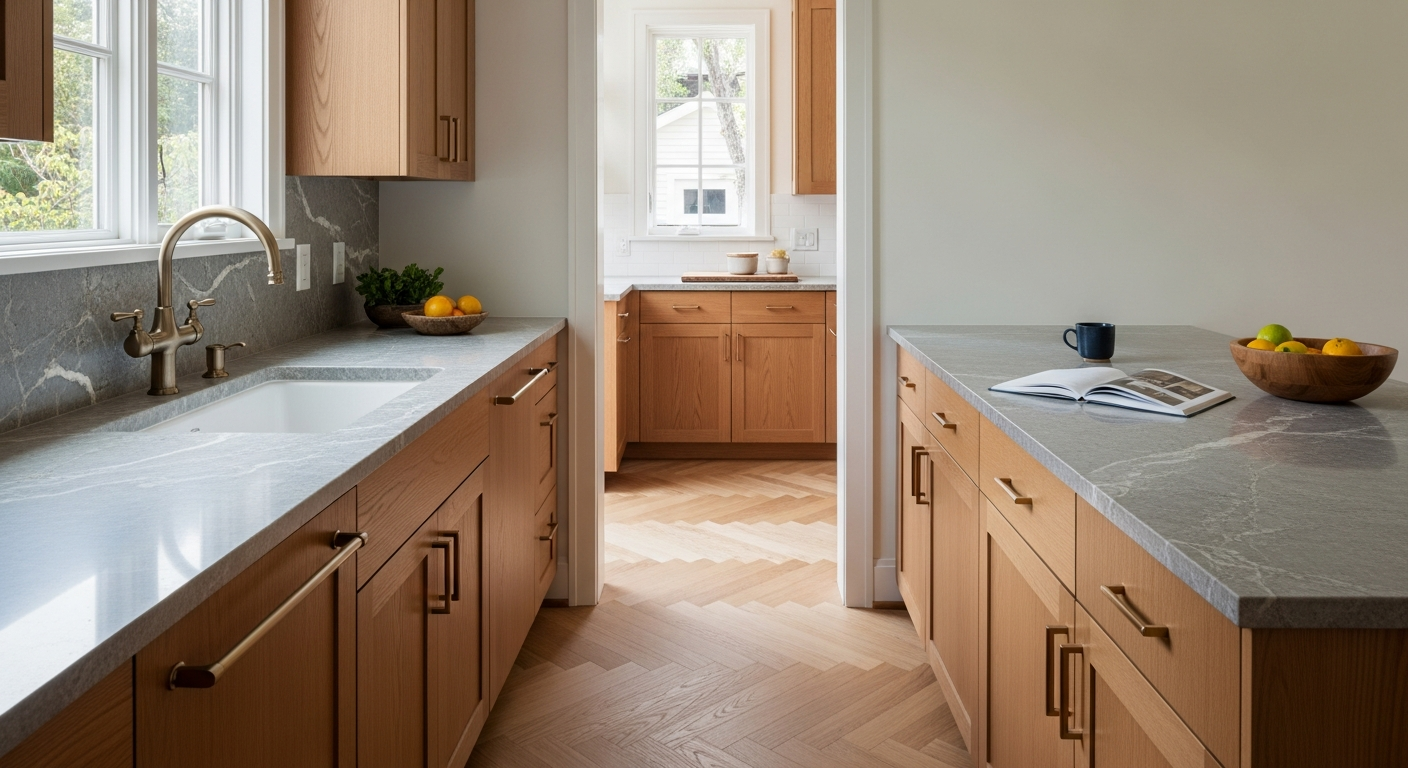
We develop 2-3 preliminary floor plan concepts showing how the ADU fits on the lot. This is where we discuss whether you want a detached new-construction ADU, a garage conversion, or an attached addition. In 2026, our most popular ADU designs across the Bay Area feature rift-cut white oak cabinetry, warm earthy tones, polished concrete or microcement floors, and Dekton or quartzite countertops — moving away from the sterile all-white aesthetic that dominated a few years ago.
Step 3: Final Design and Engineering (Week 4–8)
Once you approve the design direction, our team produces the full permit-ready plan set: architectural plans, structural engineering, Title 24 energy calculations, fire sprinkler layout (if required), and site drainage plans. We also prepare the CalGreen compliance documentation and any specialty reports like soils or arborist reports.
Step 4: Pre-Submittal Review (Optional but Recommended) (Week 8–9)
Several Santa Clara County jurisdictions — including San Jose and Palo Alto — offer optional pre-submittal or pre-application meetings where you can informally present your plans to a planner. In our experience, a 30-minute pre-submittal meeting can surface issues that would otherwise become correction items. Not every city offers this, but when available, we always recommend it.
Step 5: Formal Permit Application Submittal (Week 9–10)
We submit the complete plan set along with the permit application, fee deposits, and all required documentation. San Jose uses an electronic plan-check system (ePlan), while some smaller jurisdictions like Monte Sereno still require physical plan sets. We handle all submissions on behalf of our clients.
Step 6: Plan-Check Review and Corrections (Week 10–16)
The city's building department, fire department, and planning division each review the plans. If corrections are needed — and there almost always are some — we address them and resubmit typically within 5-7 business days. Based on our 2026 project data, first-time approval rates for our ADU submittals run approximately 20-25%, meaning 75-80% require at least one round of minor corrections. This is normal and expected, even with thorough preparation.
Step 7: Permit Issuance and Construction Start (Week 16–18)
Once all departments approve the plans, you pay the remaining permit fees and receive your building permit. At this point, construction can begin. The total construction timeline for a typical detached ADU in the Bay Area runs 4 to 7 months depending on size, site conditions, and finish level. Our team manages every phase of the build through our ADU and home additions service.
How Much Does It Cost to Build an ADU in Santa Clara County in 2026?
The total cost to build an ADU in Santa Clara County in 2026 ranges from $180,000 to $450,000+, including design, permitting, and construction. Based on our 116+ completed projects at Barcci Builders, a mid-range detached ADU of 600–800 square feet with standard finishes costs between $250,000 and $350,000, while a high-end unit with premium materials can exceed $400,000.
Let me break down where that money goes, because understanding the cost structure helps you make smarter decisions:
| Cost Category | Percentage of Total | Typical Range (800 sq ft ADU) |
|---|---|---|
| Design & Engineering | 8–12% | $18,000–$40,000 |
| Permit Fees | 3–5% | $6,000–$18,000 |
| Site Work & Foundation | 12–18% | $30,000–$65,000 |
| Framing & Structural | 15–20% | $40,000–$70,000 |
| Mechanical (HVAC, Plumbing, Electrical) | 18–22% | $45,000–$80,000 |
| Interior Finishes (Kitchen, Bath, Flooring) | 20–25% | $50,000–$90,000 |
| Exterior Finishes & Landscaping | 5–10% | $15,000–$35,000 |
| Total | 100% | $250,000–$400,000 |
The biggest variables that swing your ADU budget in the Bay Area are foundation conditions and finish level. A flat lot with stable soil in Campbell or Sunnyvale will cost significantly less for site work than a sloped lot in the Saratoga foothills that requires engineered retaining walls and a stepped foundation.
On the finish side, we're seeing strong demand in 2026 for ADUs that match the quality of the primary home. Popular material choices include herringbone-pattern engineered white oak floors, Caesarstone or Dekton countertops (Dekton Kreta and Dekton Sirius are our current bestsellers for ADU kitchens), zellige tile backsplashes, Kohler or Brizo fixtures in unlacquered brass or matte black, and Bosch or Fisher & Paykel compact appliance suites.
For homeowners considering a garage conversion ADU — converting an existing attached or detached garage — costs are typically 25–35% lower than new construction because you're reusing the existing structure and foundation. Garage conversion ADUs in Silicon Valley typically run $150,000 to $280,000 depending on how much structural modification is needed.
As a cost-per-square-foot benchmark: our 2026 Bay Area ADU projects are averaging $350 to $500 per square foot for turnkey construction with mid-range to premium finishes. That's consistent with what we see across our new construction projects in the region.
Common ADU Permit Mistakes Bay Area Homeowners Make (And How to Avoid Them)
After building 116+ projects across the Bay Area, our team has identified recurring mistakes that cost homeowners thousands of dollars and months of delays in the ADU permit process. Here are the seven most common pitfalls — and how to avoid each one:
Mistake #1: Assuming all cities follow the same rules. While California's ADU law sets statewide minimums, each city within Santa Clara County has adopted its own local ordinance with additional objective design standards. What flies in San Jose may trigger corrections in Los Gatos or Saratoga. Always verify requirements with your specific jurisdiction.
Mistake #2: Skipping the soils report. Many homeowners assume a soils report isn't necessary for a small ADU. In reality, most Santa Clara County jurisdictions require a geotechnical report for any new foundation work. Hillside areas near the Santa Cruz Mountains foothills — common in Los Gatos and Saratoga — almost always require one, and expansive clay soils in parts of San Jose and Milpitas can demand special foundation designs.
Mistake #3: Underestimating utility connection costs. If your ADU requires a new sewer lateral, water meter, or electrical panel upgrade, those costs can add $8,000–$20,000 to your project. We've seen homeowners in Palo Alto hit with $12,000+ in utility connection fees they hadn't budgeted for. Always request a utility availability letter early in the design process.
Mistake #4: Not accounting for fire sprinklers. Most ADUs in Santa Clara County cities require fire sprinklers. The system itself costs $4,000–$8,000 to install, but the real cost is in the separate fire department plan review, which adds 2–4 weeks to your permit timeline. Plan for it from day one.
Mistake #5: Designing without surveying. We've encountered projects where homeowners designed their ADU based on estimated property lines, only to discover during plan check that the actual lot boundaries — once surveyed — required a complete redesign to meet setback requirements. A property survey costs $1,500–$3,000 and is worth every penny.
Mistake #6: Ignoring the 2025 California Energy Code updates. The 2025 Building Energy Efficiency Standards (taking effect for permits filed in 2026) include updated requirements for heat-pump HVAC systems, electric-ready appliance circuits, and enhanced insulation. If your plans don't reflect these updates, expect corrections.
Mistake #7: Going with the cheapest bid without verifying contractor licensing. California requires a licensed contractor (Class B General Building Contractor) for any project over $500. Verify your contractor holds an active license through the California Contractors State License Board. Our license — CA #1086047 — is always available for verification, and I encourage every homeowner to check any contractor they're considering.
Frequently Asked Questions
How long does it take to get an ADU permit approved in Santa Clara County?
ADU permit approval in Santa Clara County takes 4 to 12 weeks from the date of a complete application, with the total process from design to permit issuance spanning 8 to 20 weeks. California law requires jurisdictions to act within 60 days of receiving a complete application, but incomplete submittals reset that clock. Based on our 2026 project data at Barcci Builders, projects with thorough initial submittals average 8-12 weeks total, while those requiring multiple correction rounds can take 16-20 weeks.
How much does an ADU permit cost in San Jose in 2026?
ADU permit fees in San Jose range from $3,500 to $6,000 for units under 750 square feet and $6,000 to $14,000 for units between 750 and 1,200 square feet in 2026. These fees include plan-check review, building permit issuance, and applicable impact fees. Units under 750 sq ft benefit from California's waived impact fees. Additional utility connection fees for sewer and water can add $5,000 to $12,000 depending on whether new connections are needed.
Can I build a two-story ADU in Santa Clara County?
Yes, California law allows two-story ADUs in Santa Clara County with specific height limits. Detached ADUs within half a mile of a major transit stop can be up to 18 feet tall, which accommodates a two-story design. ADUs with a second story above a garage or existing structure are also allowed up to 18 feet. Attached ADUs can reach up to 25 feet or the height of the primary dwelling, whichever is lower. Our team at Barcci Builders has designed and built several two-story detached ADUs in San Jose, Sunnyvale, and Campbell where lot size and zoning allow it.
Do I need a permit to convert my garage into an ADU in Los Gatos?
Yes, you need a building permit to convert a garage into an ADU in Los Gatos, but the Town cannot require you to replace the lost parking spaces — California's ADU law prohibits parking replacement requirements for garage conversions. The permit process for a garage conversion is generally faster and less expensive than new construction, with permit fees typically between $4,000 and $10,000 in Los Gatos. You'll still need architectural plans, structural engineering (especially if removing or modifying the garage door opening), Title 24 energy calculations, and fire sprinkler plans.
What is the maximum size ADU I can build in California in 2026?
The maximum size for a detached ADU in California is 1,200 square feet for a unit with two or more bedrooms, and 850 square feet for a studio or one-bedroom. Attached ADUs can be up to 50% of the primary dwelling's floor area with a maximum of 1,200 square feet. These are statewide standards that local jurisdictions in Santa Clara County cannot reduce below. Additionally, every residential property can build at least an 800 square foot ADU regardless of lot coverage, floor area ratio, or other development standards — this is a key protection under California law.
How much does it cost to build a 1,000 sq ft ADU in the Bay Area in 2026?
A 1,000 square foot ADU in the Bay Area costs between $300,000 and $500,000 in 2026, including design, permitting, and turnkey construction. Based on our project data at Barcci Builders, the cost per square foot for Bay Area ADUs ranges from $350 to $500 depending on site conditions, foundation requirements, and finish level. Premium finishes — such as Dekton countertops, Bosch integrated appliances, and herringbone engineered hardwood floors — push costs toward the higher end. Garage conversions of similar size typically cost 25-35% less than ground-up construction.
Do I need to live on the property to build an ADU in Santa Clara County?
California suspended owner-occupancy requirements for ADUs through January 1, 2025, under AB 1033 and related legislation. As of 2026, check current California state law for updated owner-occupancy provisions, as the legislature has considered extending or making the suspension permanent. Even when owner-occupancy rules apply, the requirement is that the owner live in either the primary unit or the ADU — not necessarily the main house. This means you can move into your new ADU and rent out the primary home, or vice versa.
What ADU design trends are popular in Silicon Valley in 2026?
The most popular ADU design trends in Silicon Valley in 2026 include warm earthy color palettes replacing all-white interiors, rift-cut white oak cabinetry, herringbone-pattern engineered hardwood floors, microcement or polished concrete flooring, Dekton or quartzite countertops (Dekton Kreta and Caesarstone are top sellers), zellige tile backsplashes, unlacquered brass hardware and fixtures by Kohler and Brizo, hand-applied plaster walls, cedar or natural wood exterior cladding, and compact induction cooktops by Bosch or Fisher & Paykel. Our clients in Los Gatos, Saratoga, and Palo Alto are increasingly requesting ADUs that feel like standalone luxury homes rather than afterthought additions.